Guide · Nail
Nail clipper types and how to choose
Not every nail clipper suits every nail. Size, edge shape and lever design change how clean the cut is and how safe it feels. This guide explains the main types and how to match one to your nails.
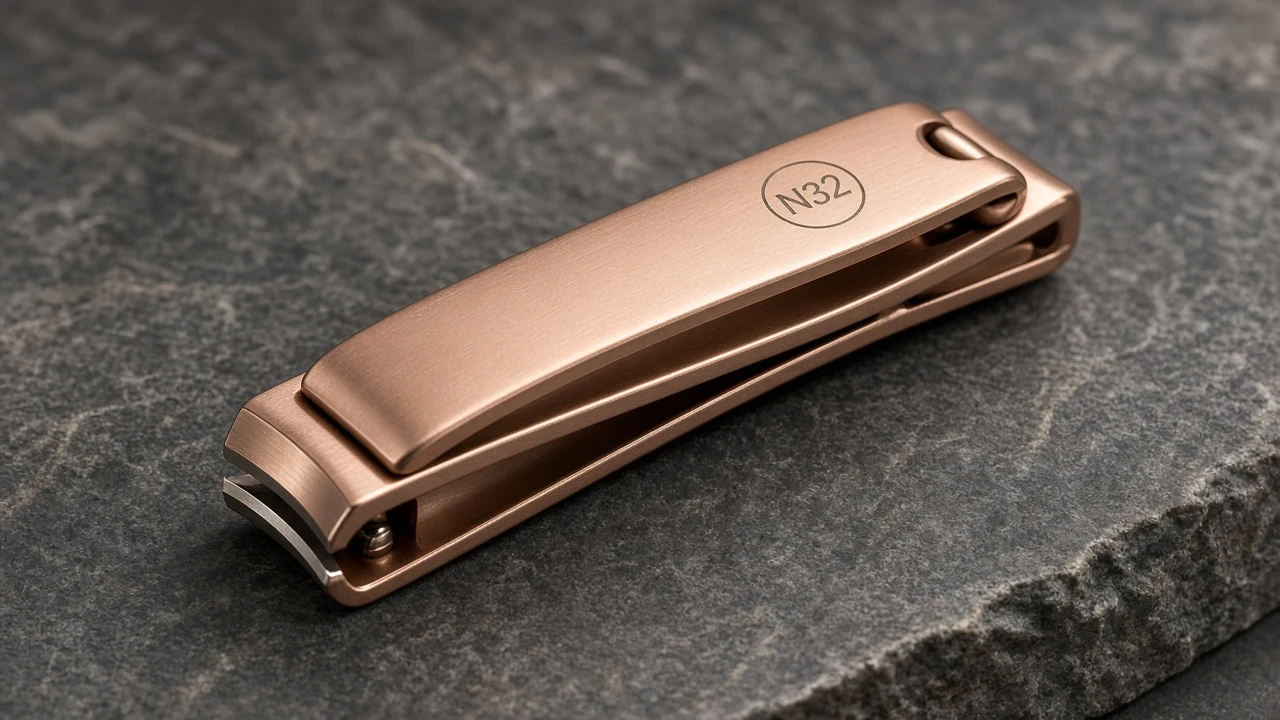
Fingernail and toenail clippers
Fingernails and toenails are different. Fingernails are thinner and curved at the tip. Toenails are thicker and flatter. That is why many people keep two clippers: a smaller one for fingernails and a larger, stronger one for toenails. The Nail Clipper Set pairs a fingernail clipper and a toenail clipper in a slim case.
Curved or straight cutting edge
| Edge | Best for | Notes |
|---|---|---|
| Curved jaws | Fingernails | Follow the natural curve of the fingertip and leave a rounded shape. |
| Straight jaws | Toenails | Cut straight across, which helps avoid trimming into the corners. |
Our Premium Nail Clipper has hand-honed curved jaws that meet edge to edge for a clean single-pass cut.
Lever and body styles
- Lever clippers use a lever that presses the top jaw down. They are the most common type and give a lot of force from a small squeeze.
- Plier or nipper styles look like small pliers. They are heavier and give more control for thick or tough nails.
- Scissor styles are for trimming small shapes, such as nail corners and hangnails.
A smooth lever action matters more than looks. If the lever feels gritty or the jaws wobble, the clipper will tear rather than cut.
Check the jaw alignment
Close the jaws and look at the cutting edges from the side and from above.
- The edges should meet along their full length with no gap.
- The lower jaw should sit flush under the upper jaw.
- The lever should move smoothly and lock firmly.
A clean cut in one press is the sign of a good clipper. Cuts that split or crush the nail usually mean misaligned or dull jaws.
Thick or hard nails
Standard clippers can struggle with thick, hard toenails. Nippers with longer handles give more leverage. If a nail is very thick, discolored, painful or ingrown, or if you have a condition such as diabetes or poor circulation, see a foot-care professional. Do not force a clipper.
How to clip well
- Wash and dry your hands or feet. Nails are easier to cut after a warm soak.
- Clip fingernails with a slight curve, and toenails straight across.
- Cut small pieces rather than trying to take the whole nail in one go.
- Smooth the edge with a nail file.
- Wipe the clipper with a disinfectant made for stainless steel and dry it.
Clipping safely
Do not cut the nail too short, and never dig into the corners of a toenail. Cutting straight across leaves the corners free and lowers the chance of the nail growing into the skin. If you cut yourself, clean the area and cover it with a clean dressing. If you notice swelling, pus or lasting pain, ask a health professional. Keep clippers away from small children and do not share them.
Single clipper or a set
If you only need to trim fingernails, one good curved clipper is enough. If you also trim toenails, a pair of clippers or a kit saves swapping a small tool for a job it was not made for. Kits that include a file, nippers and tweezers suit travel and gifts, since everything stays together in a single case. Whatever you choose, check the jaw alignment and the lever action first.
How often to clip
Fingernails grow faster than toenails, so most people trim fingernails more often. There is no single rule, so clip when the nail starts to catch on things or looks uneven, and keep each trim small. A fine file after clipping smooths the edge and prevents snags.
Materials and care
Stainless steel resists rust and holds an edge. Our clippers use 420 stainless steel, hardened to keep the jaws sharp. Read about it on our 420 stainless steel page. Keep clippers dry, store them in a case, and do not use them on anything but nails. If the cut starts to drag, our free lifetime sharpening covers clippers. Ask through the contact form, and see the warranty page for details. The Manicure Kit 5-pc adds nippers, a pusher, tweezers and a file.
Related products
Questions
Do I need separate clippers for fingernails and toenails?
It helps. Fingernails suit a smaller clipper with a curved edge, and toenails suit a larger one with a straighter edge and more strength.
Are curved or straight clippers better?
Curved jaws suit fingernails because they follow the fingertip. Straight jaws suit toenails because they cut straight across.
Why does my nail clipper split my nails?
The jaws may be dull or misaligned, or the nail may be too thick for the clipper. Soak the nail first and cut in small pieces.
How do I clean a nail clipper?
Wipe it after use, disinfect it with a product made for stainless steel, and dry it fully before storing it.
Does N32 sharpen nail clippers for free?
Yes. Free lifetime sharpening covers our clippers, along with our scissors, shears and nippers.
All guides · General information only. Ask a health professional about skin or nail concerns.