Guide · Nail
How to care for and sharpen cuticle nippers
Cuticle nippers have fine edges that dull and misalign easily. A short routine after each use keeps them cutting cleanly, and knowing when to sharpen them saves you from replacing a good pair.
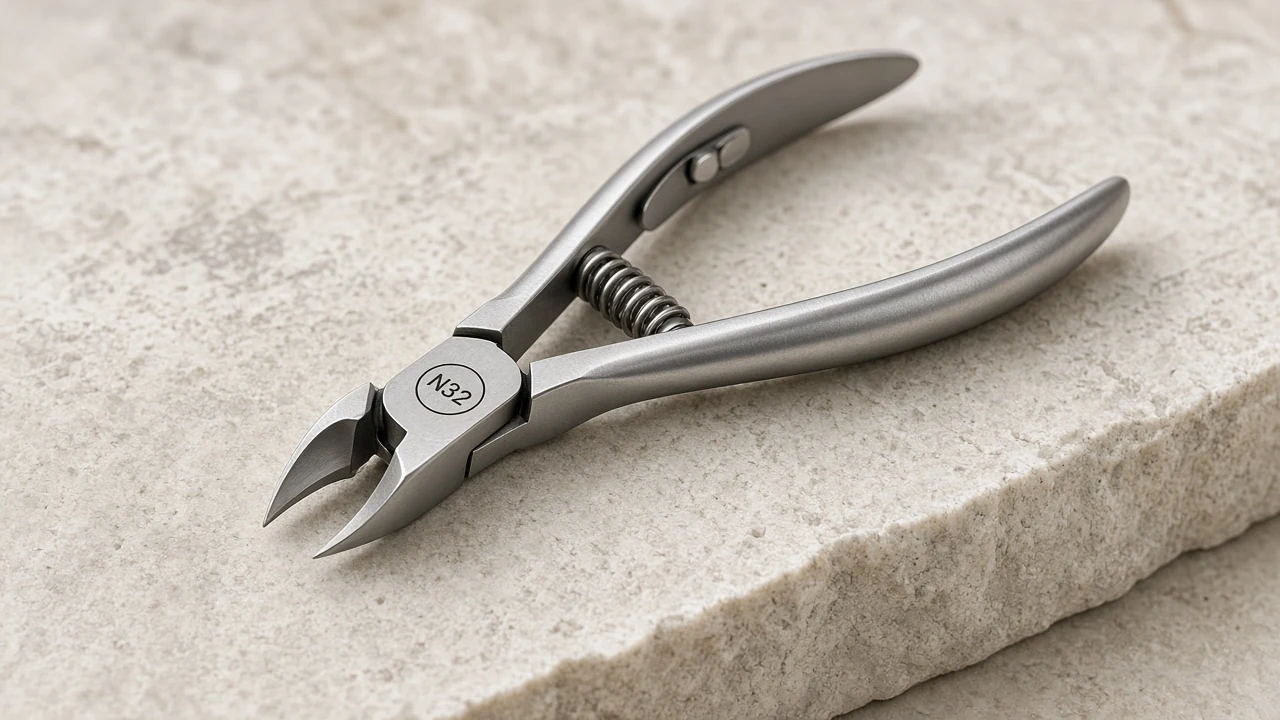
Why nippers need regular care
Cuticle nippers cut with two fine edges that must meet exactly. A drop, dried debris in the pivot, or a build-up of skin and oil can all make them misalign or stick. A few minutes of care after each use keeps both the edges and the spring working well.
After each use
- Wipe off skin and debris with a clean cloth or a soft brush.
- Open the nippers fully and clean between the jaws and around the pivot.
- Disinfect with a product made for stainless steel tools, following the contact time on the label.
- Dry thoroughly, including the pivot and spring.
- Store them closed or with a tip guard, in a dry place.
What to avoid
- Long soaks. Leaving nippers in liquid for hours can cause rust spots or loosen the pivot.
- Bleach and chloride-heavy cleaners. These can pit stainless steel.
- Dropping. A fall can bend the tips or knock the edges out of line.
- Cutting hard material. Nippers are for skin only. Cutting nails, wire or thread dulls the edge fast.
- Sharing without cleaning. Disinfect between every person.
Oil and spring care
Put one small drop of tool or sewing-machine oil on the pivot and work it in by opening and closing the nippers a few times. Wipe off any extra. Do this when the action feels stiff, or about once a month if you use them often. Keep oil off the cutting edges so you do not transfer it to the skin.
Signs your nippers are dull
- They pinch or tear skin instead of snipping it.
- You need more pressure than you used to.
- They leave small ragged edges on the skin.
- The tips no longer meet evenly when closed.
These are signs they need sharpening or realignment, not that you should squeeze harder.
Why not sharpen at home?
Cuticle nipper edges are short, angled and must meet exactly. A stone or file used by hand can easily change the angle, round the tips or leave one side higher than the other. That makes the nippers worse than before. Professional sharpening keeps the original angle and checks the alignment after the edge is restored.
Our nippers are covered by free lifetime sharpening, along with our scissors, shears and clippers. To arrange it, use the contact form and choose Warranty or sharpening. The warranty page explains what is covered.
Cleaning between clients
If you use nippers on more than one person, clean and disinfect them between every client, not at the end of the day. Brush off debris, apply a disinfectant made for stainless steel for the full contact time on its label, rinse if the label asks for it, and dry before the next use. Keep a spare pair so one can be cleaned and dried while the other is in use. Never return a used pair to a shared tray without cleaning it.
Storage tips
Store nippers dry, away from other metal tools that could knock the tips. A small case, pouch or tip guard is ideal. Avoid damp bathrooms and the bottoms of bags. Keep the nippers closed or guarded so the tips are protected, and so no one is cut by them when reaching into a drawer.
If you see rust
Light surface spots can often be wiped away with a soft cloth and a mild cleaner, and then the nippers should be dried fully. If rust appears on the cutting edge or at the pivot, or comes back after cleaning, stop using them and ask us for help. Rust or corrosion under normal use and care is covered by our lifetime warranty. See the warranty terms.
Related care
The same routine suits our Premium Nail Clipper and the other tools in the Manicure Kit 5-pc. For help choosing a new pair, read our guide on how to choose cuticle nippers. The 420 stainless steel page explains why drying matters.
Related products
Questions
How often should I clean cuticle nippers?
After every use. Wipe off debris, disinfect with a product made for stainless steel, and dry them completely.
Can I disinfect nippers by soaking them?
Short contact with a suitable disinfectant is fine. Avoid long soaks, which can cause rust spots and loosen the pivot.
How do I know when to sharpen my nippers?
When they pinch, tear skin, need extra pressure, or the tips no longer meet evenly.
Is it safe to sharpen nippers at home?
It is not recommended. It is easy to change the edge angle or misalign the tips. Professional sharpening is the safer option.
Does N32 sharpen nippers for free?
Yes. Free lifetime sharpening covers our scissors, shears, nippers and clippers. Ask through the contact form.
All guides · General information only. Ask a health professional about skin or nail concerns.