Guide · Barber
Barber shears: steel and edges explained
Barber shears are judged by their steel, their edge and how they feel in the hand. This guide explains the terms in plain language so you can compare shears on facts rather than slogans.
Why steel matters
A shear has to hold a very fine edge through thousands of cuts, resist rust in a wet salon, and survive daily handling. The steel sets the limits for all three. After the steel, the heat treatment, the grinding of the edge and the pivot setup decide how well the shear actually performs.
Common shear steels
| Steel | Chromium | Carbon | Character |
|---|---|---|---|
| 420 stainless | 12 to 14% | 0.15% and above | Tougher, easier to sharpen, good rust resistance |
| 440C stainless | 16 to 18% | 0.95 to 1.20% | Very hard, long edge life, more brittle if dropped |
| Premium Japanese steels such as VG-10 | Higher chromium, with added alloys | High | Very hard and fine-grained, usually in higher-priced shears |
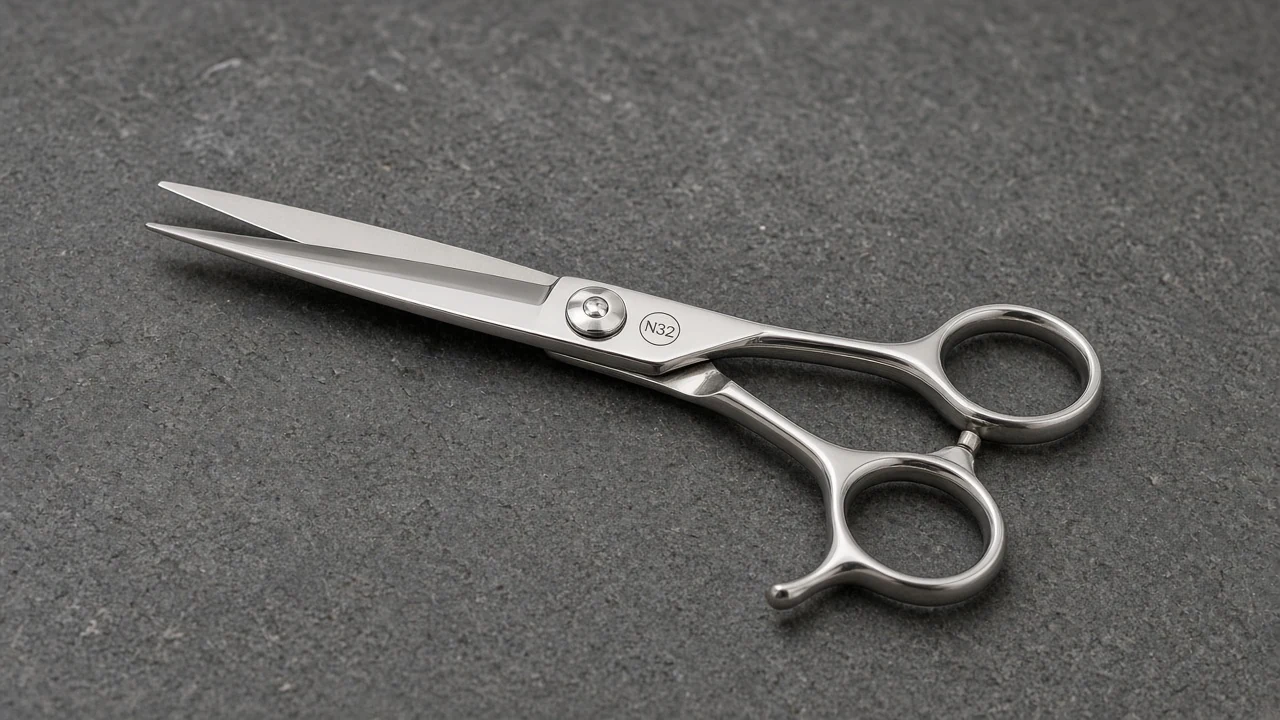
Our Pro Barber Shears 6" and Thinning Shears are listed with 440C stainless steel. You can read the details on the 440C stainless steel page, and we will confirm the grade and hardness for a specific batch on request.
Hardness versus toughness
Harder steel keeps its edge longer, but it is also more brittle. A very hard shear that is dropped on tile can chip, while a softer one may only bend. There is no single best answer. If you work fast and handle shears roughly, tougher steel forgives mistakes. If you cut all day and care for your tools, harder steel saves sharpenings.
Edge types: convex and bevel
- Convex edge. The blade curves smoothly to a very fine edge, like the shape of an axe head. It cuts cleanly with little pressure and suits slide cutting, but needs careful sharpening to keep its shape. Our Pro Barber Shears have hand-honed convex edges.
- Bevel edge. The blade has a flat angled face. It is sturdier and simpler to sharpen, and it suits blunt cutting and heavy use.
Handles, tension and size
Offset handles angle the thumb ring so the hand sits more naturally, which reduces strain over a long day. A finger rest supports the little finger. An adjustable tension screw sets how tightly the blades meet: too loose and they fold the hair, too tight and they wear fast and feel stiff. Size is the blade length in inches. Six inches is a popular general-purpose length. Shorter shears suit detail work, and longer ones suit long cutting strokes.
Thinning shears
Thinning shears have teeth on one or both blades. They remove some of the hair rather than cutting all of it, which blends layers and reduces bulk. The number and spacing of the teeth sets how much hair is taken. They also benefit from good steel and clean pivot adjustment, but they are used for blending, not for cutting a line. Our Thinning Shears are balanced to match the Pro Barber Shears.
Choosing a size and style
Think about the work first. Six-inch shears suit most general cutting and give good control on the neckline. Shorter shears help with fine detail. Longer shears help with long, flowing cuts on longer hair. Try the shears in your hand before buying if you can, because the fit of the thumb ring and finger rest matters as much as the steel. A pair that feels slightly awkward on day one will tire your hand every day after that.
Questions to ask before buying
- What steel is it, and is the grade named plainly?
- Is the edge convex or bevelled?
- Can the tension be adjusted, and how?
- Who sharpens it, and what does sharpening cost?
Care routine
- Wipe hair and moisture off after every client.
- Oil the pivot with shear oil daily and keep the tension correctly set.
- Never cut anything but hair. Cutting paper, tape or wire ruins the edge.
- Store them closed in a case, away from other metal tools.
- Do not drop them. Hard steel is more brittle.
- Have the edges professionally sharpened when they start to push or fold hair.
Our shears are covered by free lifetime sharpening, which you can arrange through the contact form. See the warranty page for terms.
Related products
Questions
What steel is best for barber shears?
It depends on how you work. 440C offers very high hardness and long edge life. 420 is tougher and easier to sharpen. Edge shape and finish matter as well as the steel.
What is a convex edge on shears?
A blade edge that curves smoothly to a very fine point. It cuts cleanly with little pressure and suits slide cutting, but it needs careful sharpening.
How often should barber shears be sharpened?
When they start to push or fold hair instead of cutting it. How often depends on how much you use them and how well you look after them.
What does the tension screw do?
It sets how tightly the blades meet. Too loose and the shears fold the hair. Too tight and they feel stiff and wear faster.
Does N32 sharpen shears for free?
Yes. Free lifetime sharpening covers our scissors, shears, nippers and clippers. Request it through the contact form.
All guides · General information only. Ask a health professional about skin or nail concerns.